
blog

blog

Your current location: Home > blog >
Is Your NOR Flash Failing When You Need It Most

Is Your NOR Flash Failing When You Need It Most

NOR Flash remains a cornerstone of modern embedded systems, but its reliability cannot be taken for granted. By understanding the causes of failure, recognizing early warning signs, and implementing best practices, businesses can protect their systems from unexpected disruptions. In a world where downtime is costly, ensuring your NOR Flash performs when you need it most is a critical step toward long-term success.
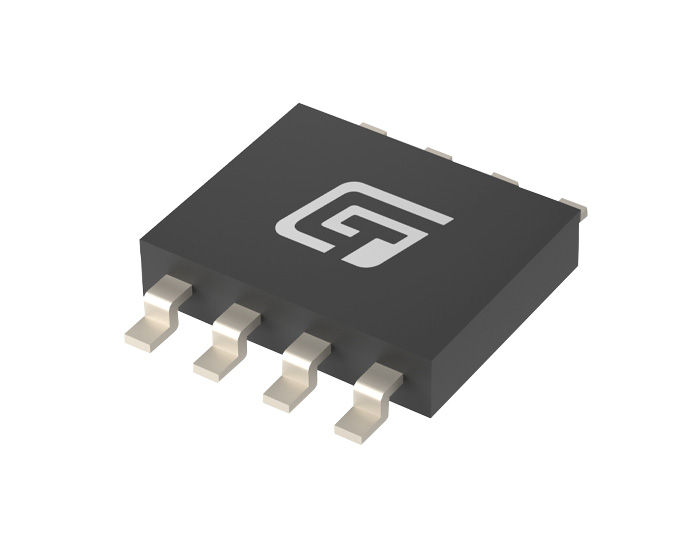
Which Is Better, NAND or NOR Flash

Which Is Better, NAND or NOR Flash

NAND and NOR flash each have their unique advantages. NAND is the preferred choice for high-capacity, cost-efficient storage, while NOR stands out for fast, reliable data access. Rather than competing directly, these technologies complement each other, helping power the diverse range of electronic devices we rely on every day.
2026年03月26日

What is NOR Flash

NOR Flash memory is a type of non-volatile storage used in a wide variety of electronic devices, from smartphones and computers to automotive systems and industrial applications. As a key component in modern electronics, NOR Flash plays a crucial role in storing data that must be retained even when power is turned off.
2026年02月28日

How Does Automotive NOR Flash Enable Faster Boot-Up in Modern Digital Cockpits

Faster boot-up in modern digital cockpits is not simply a matter of processor speed—it depends heavily on memory architecture. Automotive NOR Flash enables rapid system initialization through Execute-In-Place capability, low-latency random reads, and reliable performance under harsh automotive conditions. As vehicles continue to transform into software-defined platforms, the role of high-performance, automotive-grade NOR Flash will become even more central in delivering the seamless, responsive digital experiences drivers now expect.
  • What Are the Three Types of Memory Used in Automotive Computer Systems?
    2024-09-05
    What Are the Three Types of Memory Used in Automotive Computer Systems?
    The three primary types of memory used in automotive computer systems—Volatile Memory, Non-Volatile Memory, and Read-Only Memory—each serve distinct purposes that are crucial for the performance and reliability of modern vehicles. As automotive technology continues to advance, the integration and optimization of these memory types will remain fundamental to the development of innovative and high-performance automotive systems.
  • What is EEPROM in Automotive? Understanding Its Crucial Role in Modern Vehicles
    2024-09-05
    What is EEPROM in Automotive? Understanding Its Crucial Role in Modern Vehicles
    The EEPROM is a type of non-volatile memory, meaning it retains data even when the vehicle's power is turned off. This is particularly important in automotive systems, where consistent and reliable data storage is necessary for the vehicle's performance and safety features. Unlike other memory types, EEPROM can be electrically erased and reprogrammed, allowing for updates and modifications without removing the chip from the vehicle.
  • What is Serial NOR Flash Memory?
    2024-09-05
    What is Serial NOR Flash Memory?
    Serial NOR flash memory is a type of non-volatile storage technology that retains data even when the power is off. Unlike its parallel counterpart, serial NOR flash communicates with a system using a serial interface, typically via a three-wire or four-wire protocol. This serial communication method means that data is transferred one bit at a time, in contrast to the parallel approach where multiple bits are transmitted simultaneously.
  • Automotive Memory Market Share: Navigating the Growth of a Critical Industry Segment
    2024-08-27
    Automotive Memory Market Share: Navigating the Growth of a Critical Industry Segment
    Geographically, the automotive memory market is seeing robust growth across all major regions, with Asia-Pacific leading the charge. This region, home to some of the world's largest automotive and electronics manufacturers, is a hub for innovation in automotive technology. Countries like China, Japan, and South Korea are at the forefront of adopting new automotive technologies, driving significant demand for automotive memory solutions. North America and Europe are also key markets, particularly with their strong emphasis on EV adoption and advancements in ADAS.
  • Revolutionizing Vehicle Diagnostics: The Function of Automotive Electronic Memory Tools
    2024-08-27
    Revolutionizing Vehicle Diagnostics: The Function of Automotive Electronic Memory Tools
    The main function of an automotive electronic memory tool is to capture and store electronic memories before any major maintenance or repair work is performed. For example, when a vehicle's battery is disconnected, stored data such as radio presets, seat positions, and even more important information such as engine control parameters may be lost. Memory tools prevent such data loss by storing the information and allowing it to be reloaded after the maintenance work is completed. This function is particularly important in modern vehicles, as electronic memory plays a vital role in maintaining vehicle performance and driver preferences.
  • Is EEPROM a Flash Memory? A Closer Look at the Differences and Similarities
    2024-08-15
    Is EEPROM a Flash Memory? A Closer Look at the Differences and Similarities
    Flash Memory, as the name implies, is a non-volatile storage technology that can quickly erase and store data. Compared with EEPROM, Flash Memory has a much larger capacity, ranging from a few megabytes to hundreds of gigabytes, which makes it the first choice for storing large amounts of data in modern electronic devices. Flash Memory also has a much faster read and write speed than EEPROM, especially in batch read and write operations, thanks to its unique block erase and write mechanism.
  • Innovation breakthrough: 1.2V EEPROM chip comes out, opening a new era of low-power storage
    2024-08-15
    Innovation breakthrough: 1.2V EEPROM chip comes out, opening a new era of low-power storage
    This new EEPROM chip can not only operate stably in a low-voltage environment of 1.2V, but also has significant improvements in data retention and write times, bringing new solutions to portable electronic devices, smart cards, automotive electronics, and IoT devices.
  • What is EEPROM Used For?
    2024-08-15
    What is EEPROM Used For?
    The main use of EEPROM is to store firmware for electronic devices. Firmware is basic software embedded in hardware that can be updated or modified without replacing the entire chip. This flexibility is critical for devices such as microcontrollers and embedded systems.
  • What Type of Memory is Used in Cars
    2024-07-19
    What Type of Memory is Used in Cars
    Automotive-grade EEPROM is mainly used in automobiles. Automotive-grade EEPROM differs from standard EEPROM's ability to retain data reliably over long periods, even in harsh conditions. It is designed to meet the stringent quality and reliability standards expected in automotive applications. It ensures that critical data such as engine settings, odometer readings, and maintenance information are preserved accurately and remain accessible throughout the vehicle's lifespan.
  • How to Read EEPROM Chip
    2024-07-19
    How to Read EEPROM Chip
    To read an EEPROM chip, you will need the following tools:1. A microcontroller programmer: This device is used to communicate with the EEPROM chip. There are many commercial options available, or you can build one using a microcontroller like Arduino or PIC. 2. A logic analyzer or oscilloscope: These tools are not strictly necessary but are very helpful for debugging purposes. They allow you to see the communication between the programmer and the EEPROM.
Live Chat
Name
Position
Tel
E-mail
Company
Verify Code
Content
Get a Quote